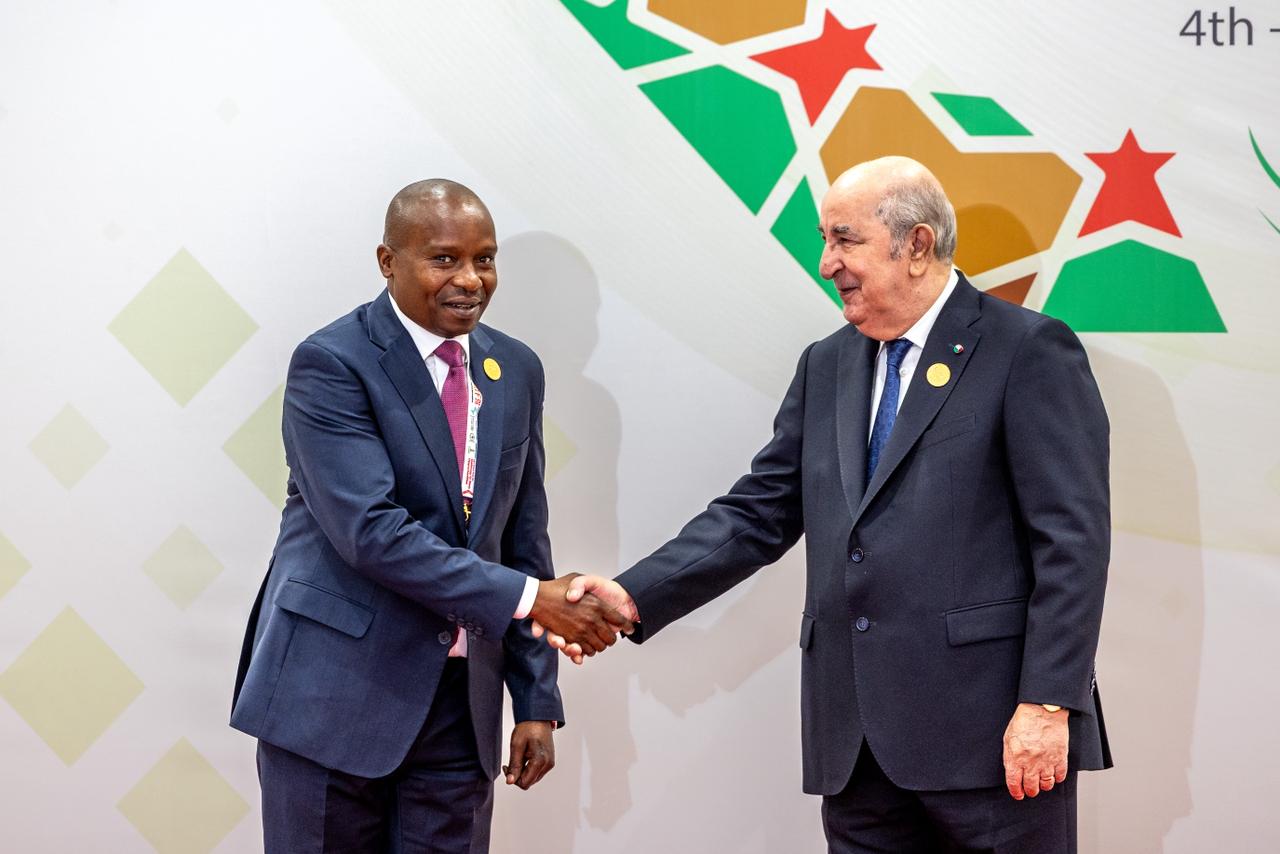
Deputy President Kithure Kindiki has declared that Africa is fast- tracking developments to defeat poverty and insecurity through trade and infrastructure connectivity.
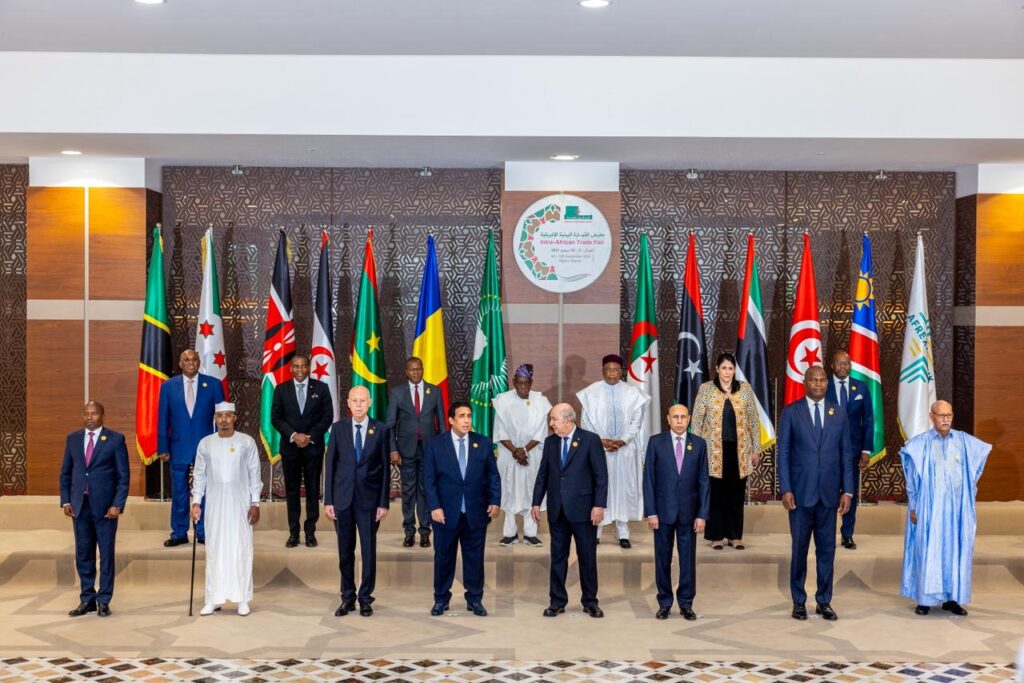
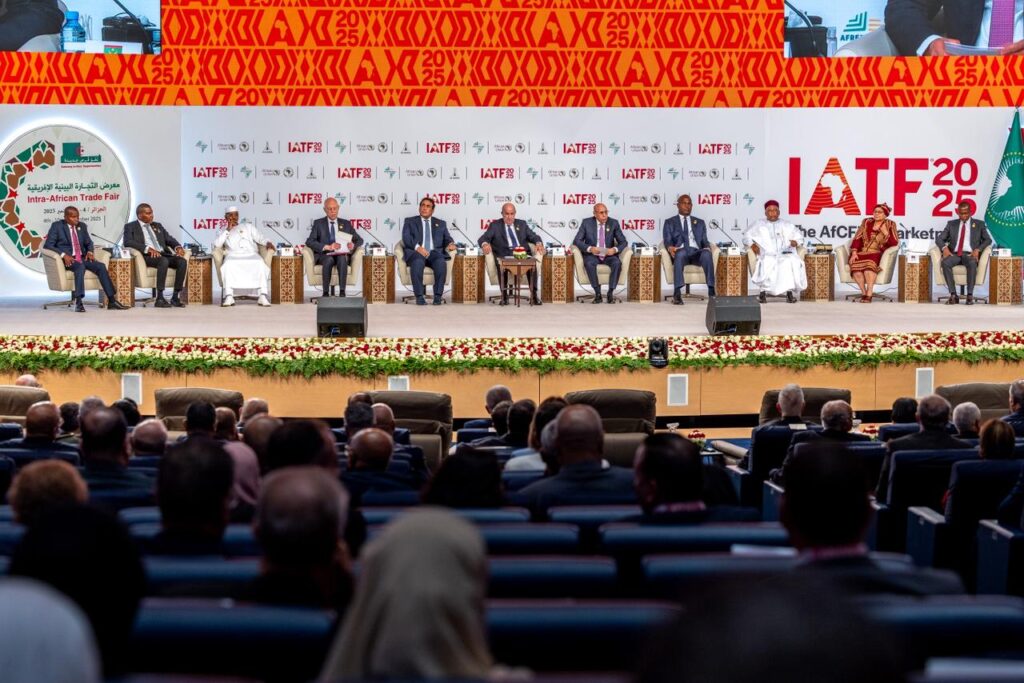
Speaking during the opening of the 4th Intra-Africa Trade Fair (IATF2025) held in Algiers, Algeria, Kindiki said Africa stands at the dawn of a transformative era and the key to unlocking its prosperity through trade, infrastructure and digital innovation.
“Political liberty without economic liberty is futile. Trade is the route that will drive poverty and not foreign aid ,” said the Deputy President.
While framing this century as a pivotal moment in Africa’s long history of struggle and resilience, Kindiki emphasized that the continent has now entered “Africa’s century”, a time to realize the dreams and aspirations of the continent.
“This is the African century, where the aspirations we have always struggled to achieve will be fulfilled. It is time to liberate the African citizen from fear and empower them to live free from want and poverty,” he said.
Infrastructure at the Heart of Growth
Highlighting Kenya’s commitment to facilitating trade, the Deputy President spotlighted the country’s massive investments in infrastructure and regional integration.
He cited the Lamu Port-South Sudan-Ethiopia Transport (LAPSSET) Corridor, which links Kenya to Ethiopia and South Sudan through roads, pipelines, and digital connectivity, with future plans for a railway line.
“In Kenya, we see trade within Africa as vital. That’s why we’re investing in infrastructure, a digital superhighway, and modernising our financial services to support trade,” Kindiki noted.
Further, he elaborated on Kenya’s ambitious transport projects, including the extension of the Standard Gauge Railway (SGR) from Mombasa to Nairobi, onward to Uganda and eventually the Democratic Republic of Congo, envisioning a trade route from the Indian Ocean to the West African coast.
“We are building modern one-stop border points with Tanzania, Ethiopia, and soon South Sudan and Somalia to ease the movement of goods and people,” he added.
The Digital Superhighway
The second in command noted beyond physical infrastructure, Kenya is also investing in digital infrastructure as a new frontier of economic empowerment.
Kindiki revealed that the country had already completed 24,000 kilometers of its 100,000-kilometre fibre optic cable project, with the remainder expected within two and a half years.
“Modern roads, railways, and internet connectivity are not just conveniences but they are economic lifelines. They will facilitate trade and connect Africans like never before,” he asserted.
A Call for Financial Innovation
Kindiki underscored the importance of financial innovation in empowering Africa’s trade ecosystem.
He lauded Kenya’s role as a pioneer in mobile money and fintech solutions, which have revolutionized access to financial services for millions.
He called for the perfection of the Pan-African Payment and Settlement System (PAPSS) to enable real-time transactions using local currencies across the continent.
“We must create a seamless, verifiable payment system that supports real-time settlements. That’s the future of African trade,” said Kindiki.
With shrinking fiscal space and increasing foreign debt, he urged African governments to rethink financing models, particularly by embracing Public-Private Partnerships (PPPs) to deliver critical services.
“Private capital must increasingly be invested in public services because the space for the public sector to raise revenue is shrinking. We must innovate to fund trade, infrastructure, and digitisation,” he advised.
Inclusive Growth Is Non-Negotiable
To ensure sustainable development, Kindiki stressed the need for inclusive economic growth one that leaves no one behind.
“For Africa to achieve prosperity, it must be inclusive across generations, gender, and regions. Women and young people must be deliberately included in our growth story,” he said.
The Deputy President closed his remarks with a bold vision: a united Africa empowered by its own trade, innovation, and human capital.
“This is Africa’s century. It must be a century of inclusive growth and shared prosperity not just freedom from colonial rule, but freedom from want, fear, and poverty,” Kindiki said.