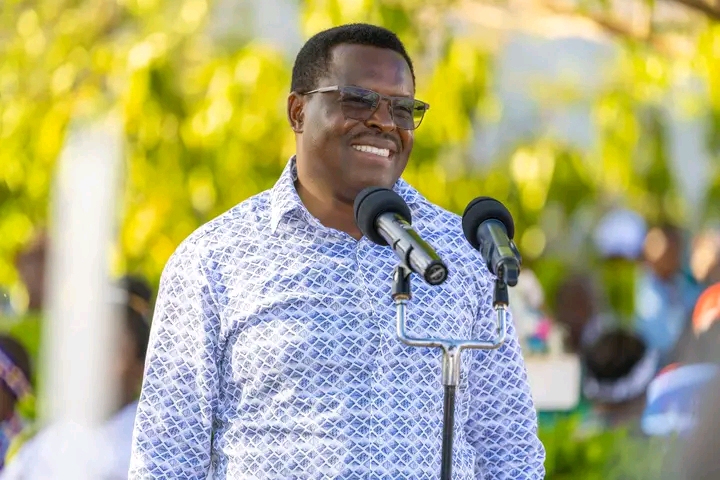
Tharaka Nithi Governor Muthomi Njuki has pledged to defend devolution against political interference and push for increased county funding to Sh500 billion, as he took over leadership of the Council of Governors (CoG).
Njuki made the commitment after taking over from Wajir Governor Ahmed Abdullahi, who completed two consecutive one-year terms at the helm of the council.
The new chairperson said he would uphold the spirit of devolution and work to ensure counties benefit economically from the devolved system of governance.
“I will prioritize the interests of county governments even when they conflict with those of the national administration,” Njuki said.
He takes over at a time when county governments continue to push for increased allocations, timely disbursement of funds and the settlement of outstanding financial obligations.
The Tharaka Nithi governor said his administration would seek stronger working relations with Parliament, including the National Assembly and the Senate, to resolve persistent disputes over county funding and the implementation of devolved functions.
“I will pursue meetings with both Houses to establish a more constructive engagement framework and ensure that county governments have a stronger voice in decisions affecting their operations,” Njuki said.
His deputy, Bungoma Governor Kenneth Lusaka, called for unity among governors, saying a united front would strengthen their bargaining position in the push for more resources.
Lusaka urged his colleagues to work together in advancing the interests of their respective counties, warning that divisions could weaken their collective efforts.
The Council of Governors, established in 2013, brings together the heads of Kenya’s 47 counties to coordinate their positions on matters affecting devolution and engage the national government on shared priorities.
Previous chairpersons include former governors Isaac Rutto, Peter Munya, Josphat Nanok, Wycliffe Oparanya, Martin Wambora and Anne Waiguru.
Njuki’s election places him at the centre of negotiations over county financing and the protection of devolved functions as governors seek to strengthen service delivery across the country.
He also pledged to take a more active role in the national budget-making process to push for increased allocations to counties, arguing that adequate funding was essential for effective service delivery and economic development at the grassroots.
Njuki also pledged to follow up on stalled projects funded by development partners, saying such investments were critical to improving livelihoods and accelerating development across the 47 counties.
He called for an environment that allows development partners to continue supporting county programmes, noting that their contribution to local development should not be undermined by administrative and institutional challenges.
The new chairperson takes over an institution that has played a central role in representing county governments in negotiations with the national government, particularly on revenue allocation, the transfer of devolved functions and intergovernmental relations.
Under Abdullahi’s leadership, the council highlighted progress in expanding healthcare, agriculture and infrastructure services.
However, the implementation of devolution continues to face challenges, including funding constraints, delayed disbursements in previous financial periods, duplication of functions and disagreements over the distribution of resources.
In the 2025/26 financial year, counties reported increased investment in key sectors, including healthcare, but Njuki’s challenge will be to translate the council’s advocacy into tangible gains for county governments, particularly through increased funding, improved relations with national institutions and the timely implementation of development projects.
Outgoing chairperson Abdullahi said his tenure had focused on creating an enabling environment for county governments to operate and strengthening relations between the CoG and the national government.
He expressed confidence that the groundwork laid during his leadership would help his successor advance the devolution agenda and address the challenges facing county governments.