
While Tharaka Nithi and Meru County may differ on who has the longest boundary with Meru National Park, they share the same reality and their farmers bear the cost of conservation.
For years, villages along the edge of Meru National Park have lived with a difficult paradox.
They are neighbors to one of Kenya’s most iconic wildernesses, home to elephants, hippos, buffaloes, lions, and hundreds of bird species, yet this proximity brings more pain than profit.

In Tharaka South, from Ura Gate towards Marimanti, farmers wake up to find entire acres of maize, green grams, and bananas trampled overnight.
In Meru County, around Murera and Kinna, the story is the same. Children fear walking to school in the early morning, and mothers fear fetching water near rivers where hippos have strayed.
Human-wildlife conflict is not a statistic here; it is a daily reality.
Despite this heavy cost, the benefits of the park flow far away.
All gate collections and tourism revenues are remitted to the Kenya Wildlife Service and the national government in Nairobi.
Neither Tharaka Nithi nor Meru receives a direct, legally guaranteed share for local development.
A few corporate social responsibility projects and occasional compensation cannot cover the loss of a whole season’s harvest or the trauma of an injury.
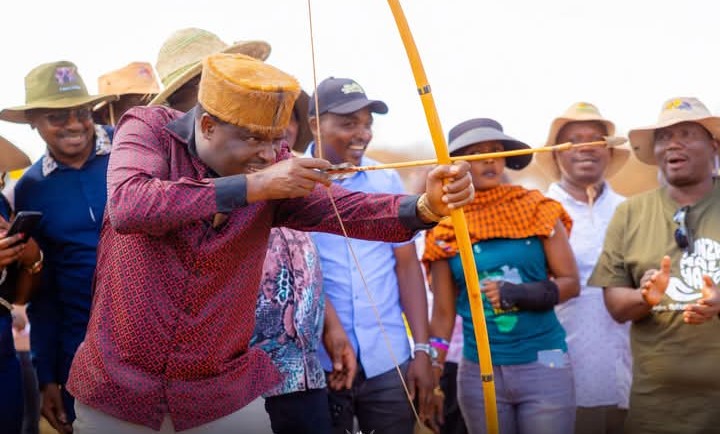
Recently, the two counties, on separate dates, organized cultural events to market their culture, tourism, and conservation.
The same energy and resources should be further utilized to save communities from frequent challenges and risks.
The opportunity lies in unity. Instead of competing, the two counties should present a joint case for revenue sharing, so that communities who live with elephants also benefit from tourism. Ura Gate in Tharaka Nithi remains largely untapped as an alternative entry to Meru National Park.
If both counties jointly lobby for its development, it could open up a new tourism circuit with community conservancies, eco-lodges such as Kajuki and Marimanti Baobab, local guides, and cultural festivals.

Revenue sharing would not be about handouts; it would be an investment in electric fencing, faster compensation, bursaries for children from affected villages, water projects, and youth employment as rangers and guides.
The elephants of Meru National Park do not know county boundaries; neither should the benefits of conservation.
Conservation can only be sustainable when those who coexist with wildlife feel the value of wildlife.