By Benjamin Muriuki.
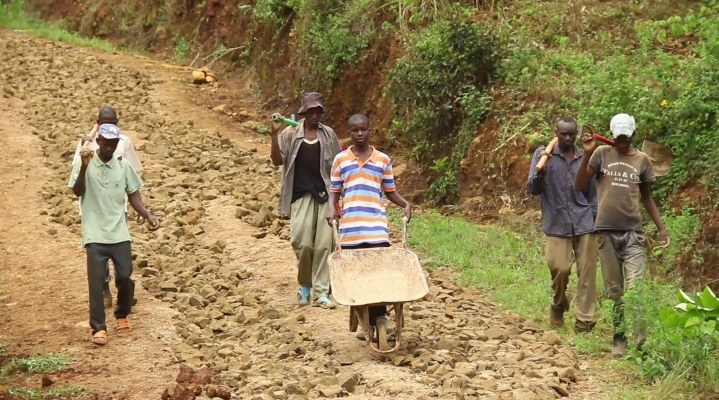
Residents of Gitugu village in Ntima West ward have protested over the poor road network in the area with most of them being impassable.
They said they have long endured the challenges posed by deteriorating state of the roads, which has significantly impacted their daily lives and economic activities.
The community has expressed deep frustration over years of neglect by the authorities responsible for infrastructure development.
Jackson Mwiti, a resident, highlighted the dire situation, noting that vehicles cannot access their homes due to the poor state of the roads.
He said they are forced to leave their vehicles on the main roads and trek on foot.
Mwiti called on Meru Governor Isaac Mutuma, to address the pressing issue and bring the much needed relief to the community.
Another resident, Jediel Kiunga, shared how the community came together to contribute their limited resources to purchase stones in an attempt to improve the roads.
“This collective effort underscores our determination to find solutions despite the lack of support from our leaders. We believe that better road conditions would not only ease our daily struggles but also enable us to transport our farm produce efficiently thus contributing to the economic growth of the region and the country,” said Kiunga.
Additionally, William Kathurima pointed out the poor condition of the roads connecting Ciobarata bridge to Kathurine.
He said these roads which are crucial for transport and trade, have been left neglected, making movement difficult for residents and businesses alike.
The residents also recounted a heartbreaking experience when a villager fell seriously ill at night.
“Due to the impassable roads, we were forced to carry the patient on our back in order to seek medical attention because no vehicle could pass through. This incident serves as a stark reminder of the critical need for functional infrastructure in ensuring the safety and well-being of the community,” said a resident.
The villagers are now urging their leaders to take responsibility and fulfill the promises they made in their manifestos.
They emphasize that tangible improvements in infrastructure are essential for enhancing their quality of life and fostering economic development.
They called for accountability and action, as they hoped for a future where their voices are heard and their needs are met.