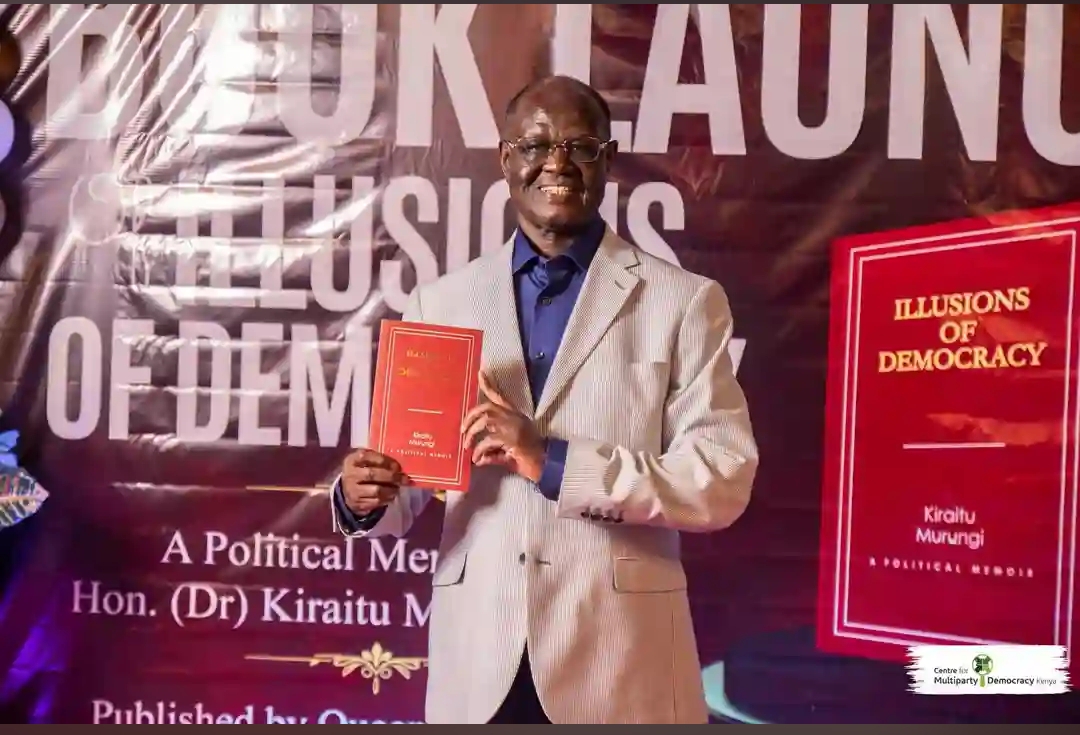
Former Meru Governor Kiraitu Murungi has criticised the growing influence of money in Kenya’s multiparty democracy, saying elections have increasingly become contests of bribery, manipulation and political violence rather than a competition of ideas.
In his new book, The Illusions of Democracy, that was launched on Friday October 16 2026 at Movenpick Hotel Nairobi,the veteran politician examines the gap between the democratic ideals enshrined in the constitution and the realities experienced by ordinary Kenyans, particularly those living in rural areas.
Kiraitu in his speech said the country’s democratic gains were being undermined by poverty, corruption, ethnic divisions and a political culture in which voters increasingly expect handouts from candidates seeking elective positions.
“What we celebrate as democracy today is not democracy; it is actually a celebration of money because financial inducements had taken centre stage in electoral politics,” said Kiraitu .
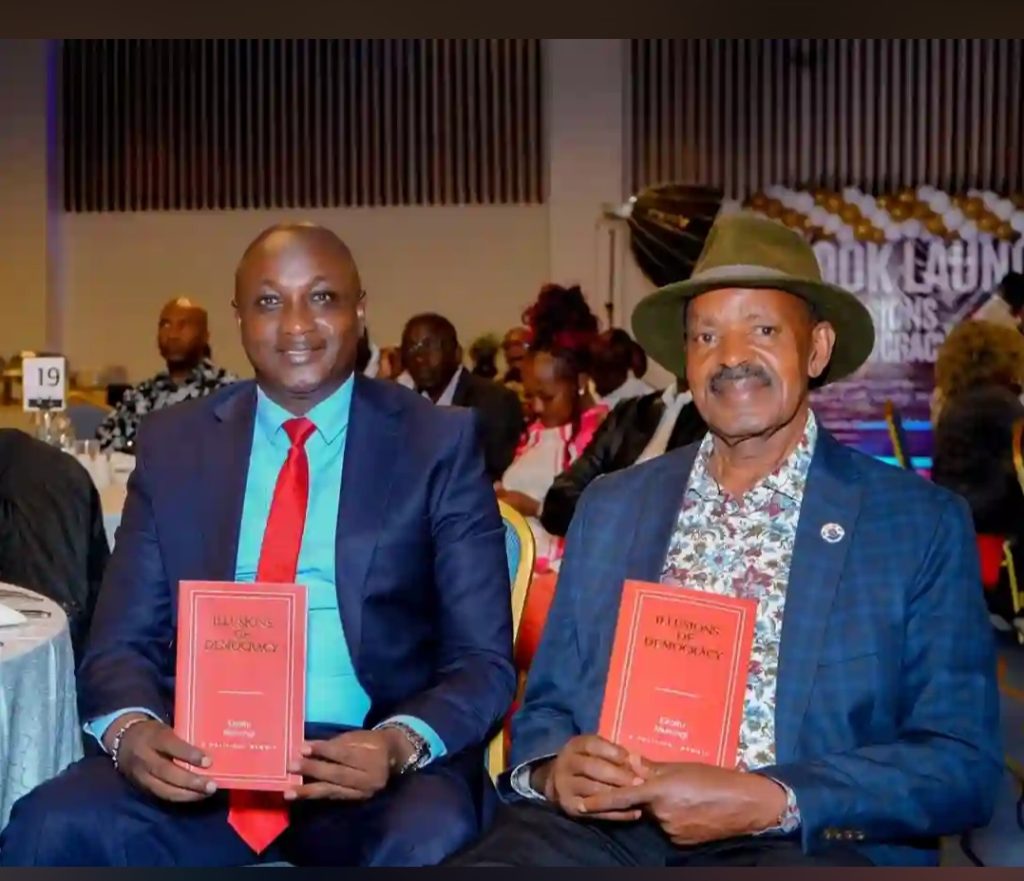
He said Kenya’s struggle for democracy had been long and difficult, marked by both progress and disappointment warning that the country risked losing the gains made over the years if elections continued to be dominated by money, deceit and intimidation.
He recalled the optimism that accompanied the struggle to end the former KANU regime, saying young politicians of his generation had viewed politics as an instrument for liberating Kenyans from oppression and poverty.
In his book he emphasized that , they had underestimated the challenges that would emerge under multiparty democracy, including corruption, ethnic politics, poverty, political illiteracy and the struggle for power.
The former governor said the harsh economic realities facing many households had also changed how citizens engage with politics, with survival taking priority over broader democratic ideals.
In rural communities, he said, concerns about food, rainfall, drought, crops, livestock, sickness and family welfare often outweighed discussions about political accountability and freedom.
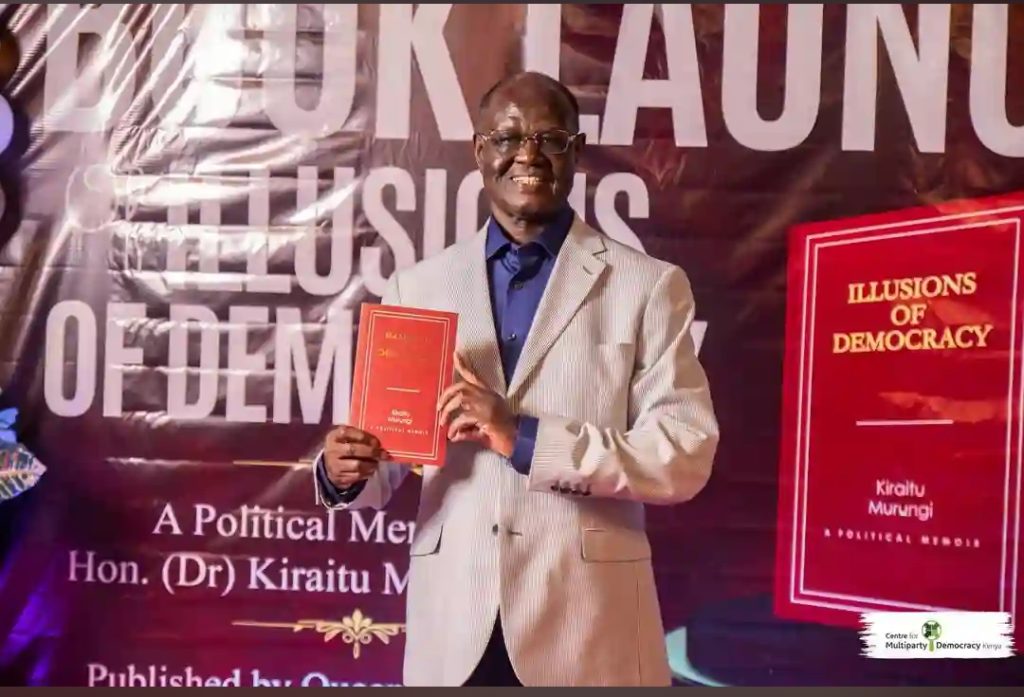
According to Kiraitu , the financial pressures facing ordinary Kenyans have created an environment in which politicians are increasingly expected to provide immediate financial assistance in exchange for political support.
He said the culture of handouts and sycophancy associated with the former KANU era had returned, with politicians using funerals and other community gatherings to distribute money and cultivate loyalty.
The trend, he argued, has contributed to public cynicism, with many voters losing confidence in politicians’ ability to bring meaningful change.
Kiraitu also questioned the quality of civic education, saying political awareness remained inadequate in sections of the electorate, particularly in rural communities.
He said elections had increasingly become a theatre of bribery, deception, manipulation and physical violence, warning that the growing culture of political intolerance could undermine national stability.
“Many people equate democracy with elections. But elections themselves have become a threat to democracy,” he said.
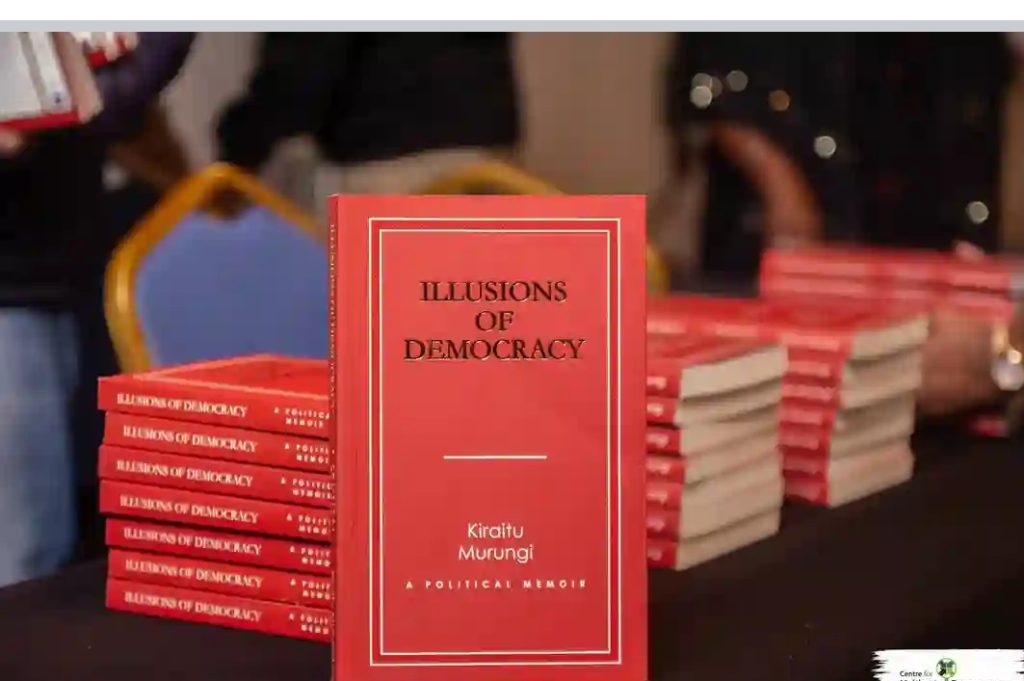
He cautioned that ethnic polarisation, political hostility and the rise of violence could create a cycle of instability, while warning that youth-led political movements, despite their frustrations and intentions, could leave leadership gaps if they failed to establish clear and sustainable alternatives.
The former governor said his book was intended to contribute to the national conversation on democracy by examining both the achievements and contradictions of Kenya’s multiparty political system.
He urged readers to look beyond political slogans and examine the realities of governance, voter participation and the country’s democratic institutions.
Reflecting on his own political journey, Kiraitu said his experience in government and his subsequent election loss in 2022 had taught him important lessons about power, ambition and personal fulfilment.
He said political success and failure were not permanent, adding that the pursuit of power, status and public recognition could leave individuals dissatisfied if they placed too much value on titles and material possessions.
“You don’t have to be elected to be happy. You don’t have to be elected to make a positive difference in our society,” he said.
He said meaningful contribution to society could also come through family relationships, friendships and efforts to improve communities outside elective office.
He said this was the thinking behind the final chapter of his book, titled The Pursuit of Happiness.
The veteran politician also paid tribute to his wife, whom he described as his greatest companion, acknowledging her support through five decades of political and personal challenges.
He said his experiences had reinforced the importance of finding fulfilment beyond public office and remaining committed to improving society regardless of one’s political position.
Through the book, he invited Kenyans to reflect on the country’s democratic journey, celebrate its achievements and confront the challenges that continue to shape electoral politics.