
Deputy president Kithure Kindiki has announced government plans to roll out technology-driven strategy to strengthen wildlife and boost tourism in the country .
Deputy president speaking today Friday 19th ,2025 during the pass out of 147 Kenya Wildlife Service (KWS) cadet officer, 103 junior officers, at the KWS Law Enforcement Academy in Manyani, Taita Taveta County, noted the move will grow tourism and secure livelihoods.
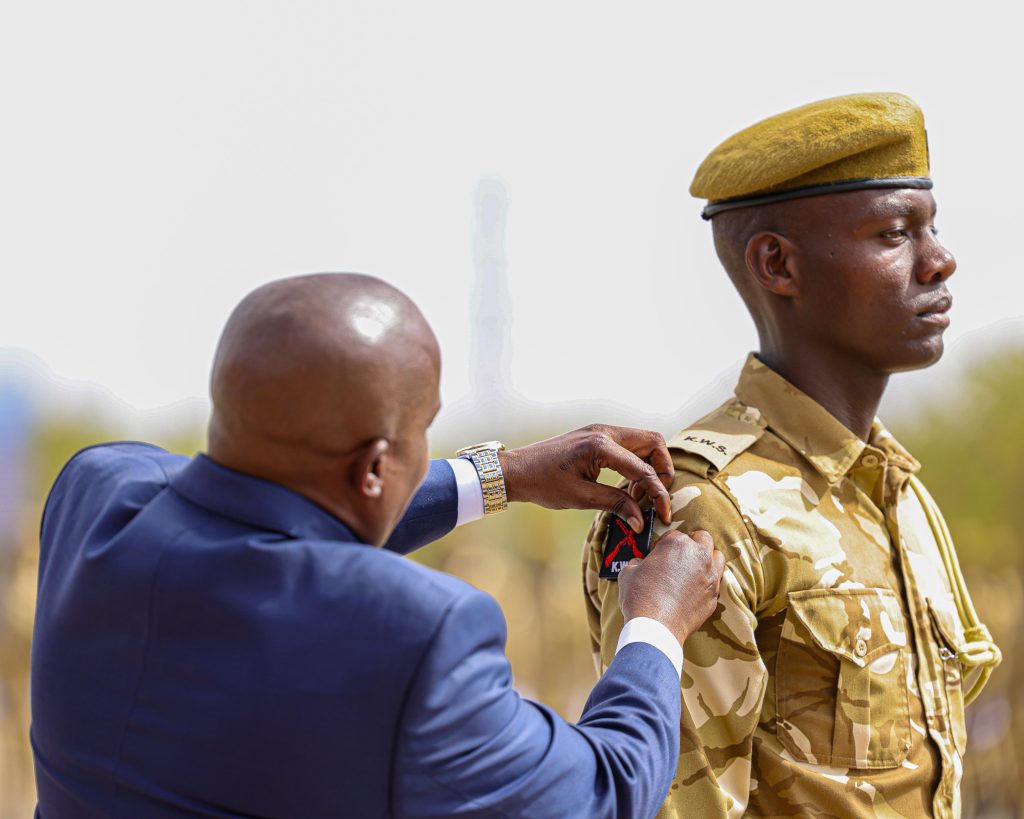
Prof Kindiki who was the Cheif guest at the parade , said the graduation marked a turning point in Kenya’s conservation journey, signalling the rise of a younger and better-equipped conservation force ready to confront emerging threats to wildlife, communities and national security.
“This is a historic day you now join a noble tradition of service to protect our natural heritage with courage, discipline and honour,” he told the graduating cadets.
Over the past three years, the Deputy President said, the government has undertaken some of the most far-reaching reforms in Kenya’s conservation history, anchored on science, technology and community participation.
“Kenya is one of world’s most blessed nations with plenty of Wildlife roaming the rangelands and plains of our terrestrial and marine national parks and reserves,”he said .
He noted automation of revenue collection of wildlife park fees has pushed revenue from 4 billion shillings in 2022 to just under 8 billion shillings last year saying they are tergeting 11 billion this year.
These and other measures Kindiki said have seen foreign tourism numbers surge by half a million in 2024, as the numbers of key wildlife species replenish.
Directed the Ministry of Tourism and Wildlife, and KWS to work with all the 47 county governments to operationalize the dozens of national wildlife reserves that are under county goverments but remain dormant, denying our country revenue for county goverments and communities and curtailing the potential of the sector to create more jobs and bring in more foreign exchange.
Through KWS, security has been strengthened by deploying elite ranger units, expanding the workforce and modernising surveillance using artificial intelligence, drones, satellite-linked patrol systems and digital radio networks.
“These reforms have upgraded rapid-response capabilities and intelligence-led operations, positioning Kenya as a global leader in sustainable wildlife management,” he said.
Kindiki noted that conservation reforms are already bearing fruit where tourism revenue has rebounded strongly in 2024, restoring international confidence in Kenya as a premier destination.

He added the government is now targeting 5 million visitors annually by 2027, supported by a strategy to diversify tourism beyond traditional safaris into culture, sports, adventure, events and meetings, incentives, conferences and exhibitions (MICE).
“Tourism depends on security and stability. When we secure our parks, we secure our economy when conservation works for communities, the nation prospers,” he said.
He emphasized that wildlife is not only part of Kenya’s heritage but also a symbol of sovereignty and a critical pillar of the economy.
Addressing gathering he lamented that to ensure conservation delivers tangible benefits, the government has invested heavily in community livelihoods, awareness programmes and modern service delivery systems, including the eCitizen platform, which has improved transparency and efficiency at KWS.
A key pillar of the new approach, the former Interior cabinet secretary said, is restoring ecological space and connectivity.
He further noted the Cabinet has approved the Nairobi National Park–Kapiti Wildlife Corridor, reconnecting the country’s oldest park to its historic dispersal areas, while other corridors such as Lake Elementaita and Nakuru are at advanced stages.
He highlighted the recent expansion of the Tsavo West Rhino Sanctuary from 92 square kilometres to 3,200 square kilometres, making it the largest rhino sanctuary in the world.
The move, he said, will restore black rhinos to their historic range and give the endangered species room to recover.
He at the same time noted the government is establishing a National Wildlife Protection and Anti-Poaching Modernisation Framework, integrating elite ranger units, advanced surveillance, drones and a modern command-and-control system across protected areas.
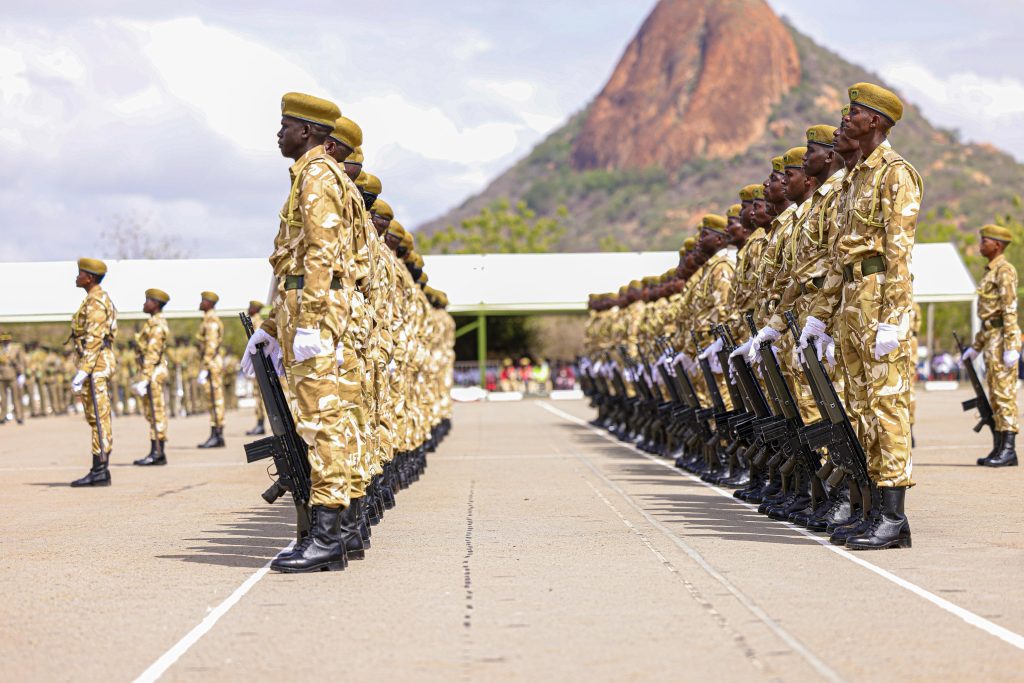
The DP added , Cross-border cooperation is also being strengthened to dismantle international wildlife crime networks, alongside plans to set up a National Wildlife Forensics and Intelligence Centre.
“The government is investing in the welfare of rangers through the recruitment of 1,500 officers, improved training, better housing in remote and high-risk stations and stronger legal protection.Rangers will be protected by the law and those who threaten or attack them will face the full force of justice,” he said.
He further lamented that financing conservation sustainably remains a priority, with the government tapping green financing, climate funds, carbon markets such as REDD+, conservation bonds and public–private partnerships to reduce pressure on the Exchequer while expanding eco-tourism infrastructure and community enterprises.
On human–wildlife conflict, Prof Kindiki said coexistence must be guided by science, early-warning systems and fair compensation, backed by strong community partnerships.
“As I look at you today, I see the future of conservation in Kenya now go forth with honour and Serve your country with courage. Protect the pride of our nation.”he concluded .
Also present were Cabinet Secretary for Tourism and Wildlife Rebecca Miano, Director- General of the KWS Prof Erastus Kanga, the Governor of Taita Taveta County Andrew Mwadime, MPs, MCAs, conservationists and other guests were present.