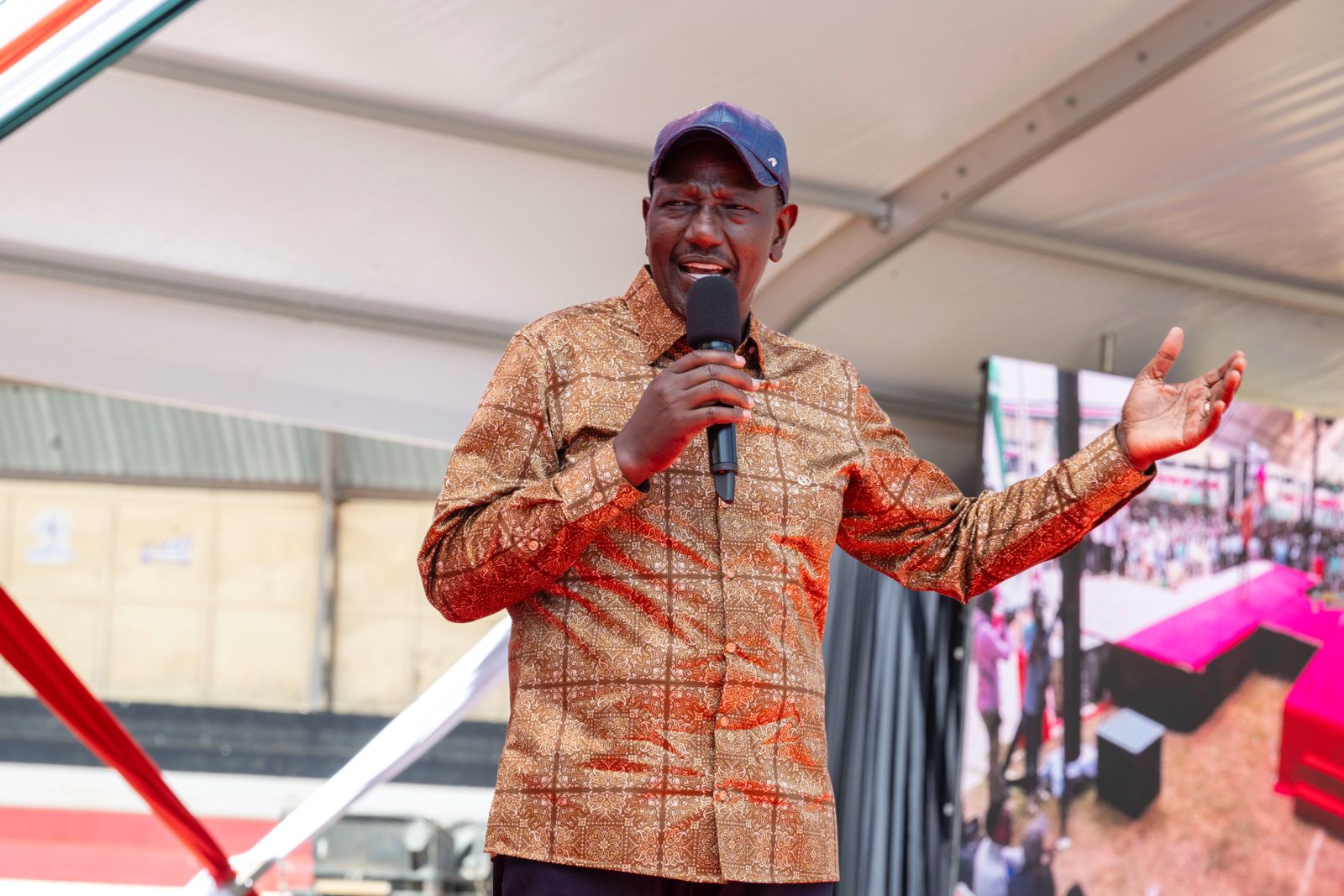
President William Ruto has ordered that all needy learners transitioning from junior school to senior school to report to their respective institutions by Monday next week if they lack school fees.
The directive comes amid concerns that thousands of learners risk missing school due to financial hardship as the country implements the Competency-Based Education (CBE) system.
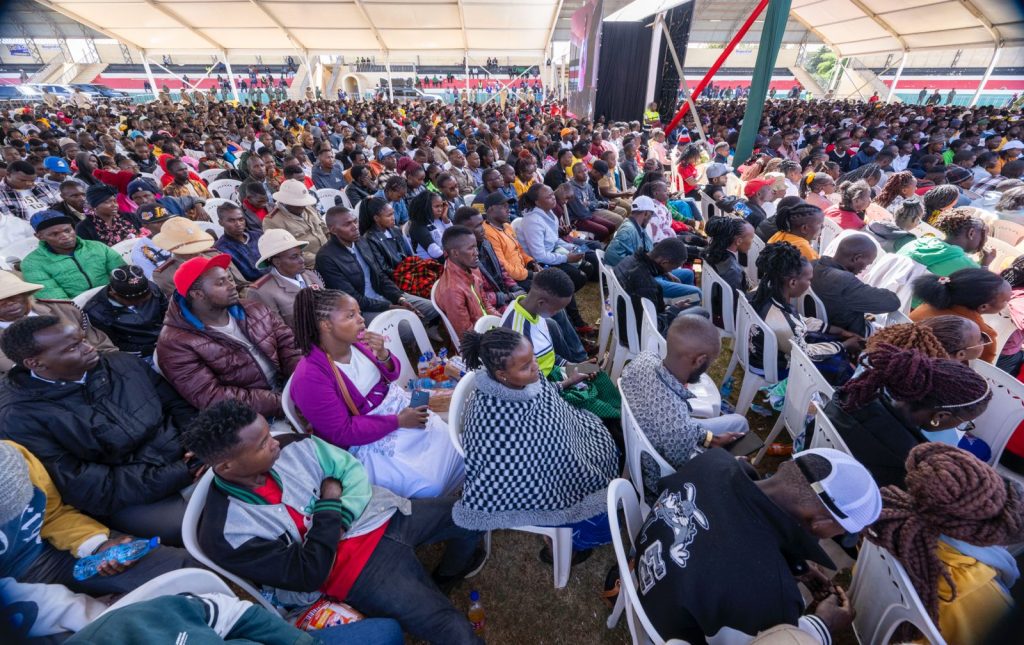
Speaking at Kinoru Stadium in Meru County during the launch of the NYOTA programme for Meru, Embu and Tharaka Nithi counties, the President said no child should be left behind because of poverty, insisting that the government has set aside adequate resources to support the transition.
“I have directed all chiefs to ensure that every child who completed junior school reports to senior school no learner should remain at home because of lack of fees, uniform or any other reason,” President Ruto said.
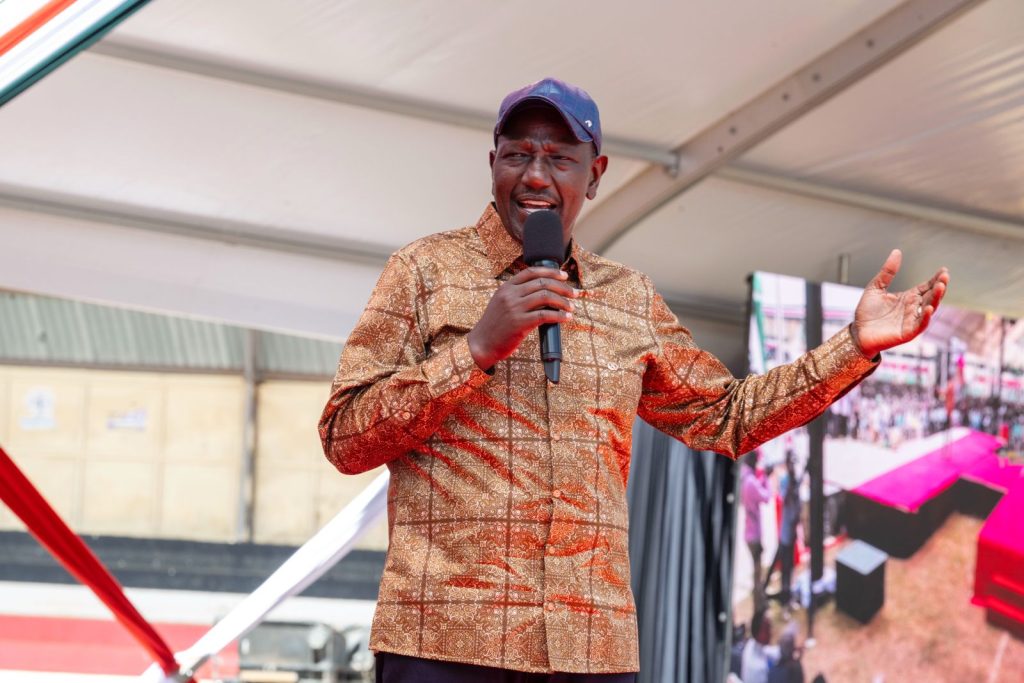
He instructed local administrators to take charge of the exercise and ensure full compliance across the country, saying education remains the strongest equaliser in society.
The President acknowledged that many parents are facing financial strain but assured them that the government has allocated Sh44 billion in capitation to cater for learners joining senior school under the new education structure.
“We are aware that many families are struggling. That is why we have put in place sufficient funding. The capitation we have allocated is adequate to support every Kenyan child transitioning to senior school, especially those from needy households,” he said.
President Ruto emphasised that school heads should not turn away learners over fees or uniforms, urging students to report to school even if they only have their former junior school uniforms.
“Even if you do not have a uniform, go to school with the one you have. No headteacher should send any child away because of fees or uniform. Parents should be given time to raise the money,” he added
He reiterated that the government has sufficient funds to cover the first term of the academic year and maintained that no child should miss school under any circumstances.
The Head of State said his administration is committed to expanding access to education as a long-term solution to inequality and unemployment, noting that many young people miss out on opportunities not because they lack ability, but because of financial hardship.
“Education is the most powerful tool for transforming lives. We are not only making resources available, but we are also creating opportunities so that every child, regardless of background, has a fair chance to succeed,” he added.
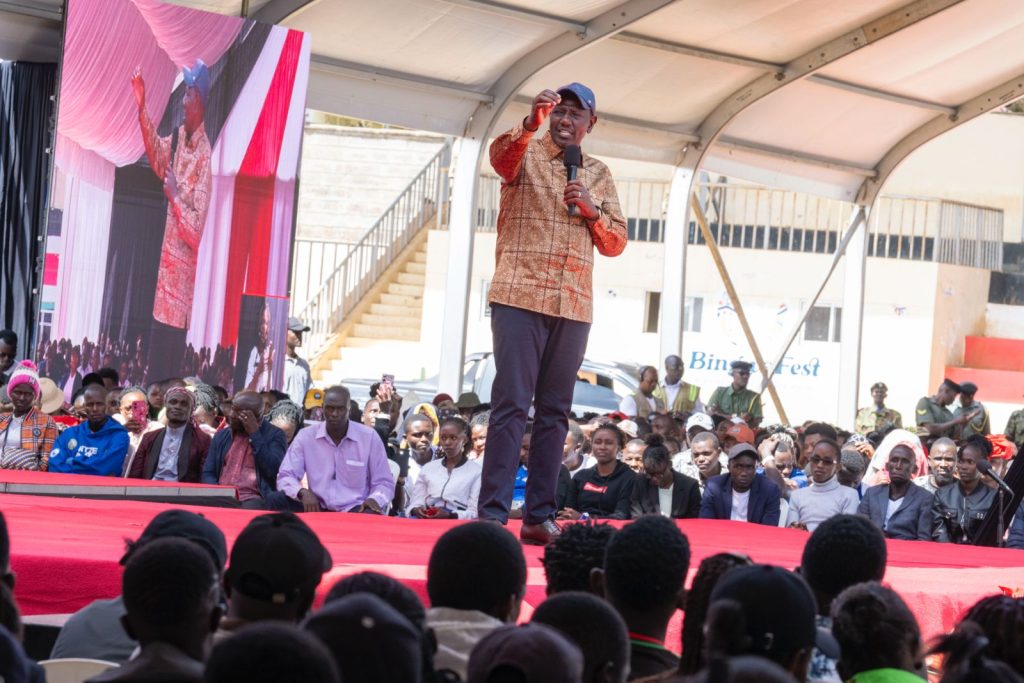
President Ruto also cautioned opposition leaders against politicizing government’s empowerment programmes, saying initiatives meant to uplift young people should unite the country rather than divide it.
“Development programmes are not political projects. They are meant to help Kenyans improve their lives. Leaders should stop misleading the youth for political gain,” he said.
At the same event, President Ruto, accompanied by Deputy President Prof Kithure Kindiki, launched a Sh168 million NYOTA Business Start-Up Capital disbursement targeting young entrepreneurs for the three counties.
The funds will benefit 6,720 youths, each receiving Sh25,000 in the first phase of the programme. Of this amount, Sh22,000 will be credited directly to the beneficiary’s Pochi la Biashara account to support business start-ups or expansion, while Sh3,000 will be deposited into a Haba na Haba savings account managed by the National Social Security Fund (NSSF).
Under the second phase of the programme, beneficiaries will receive an additional Sh25,000, bringing the total start-up capital per youth to Sh50,000.
President Ruto said the NYOTA programme is part of the government’s broader strategy to empower young people economically and reduce unemployment through direct financial support.
“For many years, leaders spoke about empowering the youth, but those promises were never fulfilled. In our administration, we are speaking through action by putting money directly into the hands of young people,” he said.
The programme is expected to boost small businesses, promote a savings culture among the youth and stimulate economic growth at the grassroots level.