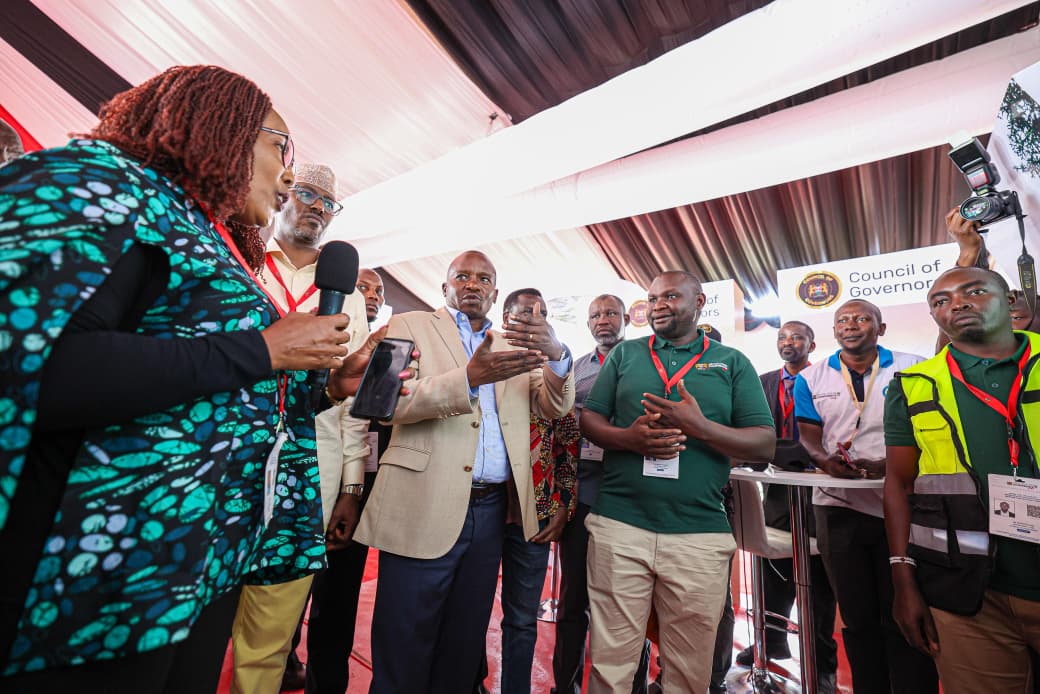
Deputy President Kithure Kindiki has issued a stern warning to governors and county leaders against using the Council of Governors (CoG) as a shield for corruption, declaring that no one will be spared in the national fight against graft.
Speaking on Friday during the official closure of the 9th Devolution Conference held in Homa Bay County, the Deputy President praised the successes of devolution over the past 12 years, but did not mince words about the growing threat of financial mismanagement in the counties.
“Devolution has been a game-changer in the socio-economic development of our country. Infact some regions once neglected have experienced transformative development projects,thanks to devolved funding,” Kindiki said.
He however cautioned county bosses against misappropriation of public funds saying the government is keen on fighting corruption in all levels of governance.
“We must be candid alongside the devolution of resources. We’ve witnessed a devolution of corruption. While many governors have shown commendable leadership, others have betrayed the devolution dream by enriching themselves with funds meant for health, education, and agriculture,” noted the DP.
In a passionate address that captured both the achievements and challenges of decentralised governance, Kindiki underscored that the Council of Governors must not become a protective club for leaders under corruption investigations.
“The Council of Governors must not be a human shield for corrupt county bosses. There will be no sacred cows in the fight against graft and that must include governors,” he said, drawing applause from the audience.
A Pivotal Moment for Devolution
The Deputy President however hailed the four-day conference as a milestone forum that re-energised the country’s commitment to devolution, particularly in addressing structural inequalities, amplifying citizen participation, and promoting inclusion and equity.
He lauded the shift of billions of shillings from the national government to the counties over the past decade, saying the funds have brought life-changing infrastructure and services to historically marginalised regions.
However, Kindiki noted that the full promise of devolution remains unrealised, largely due to widespread mismanagement and embezzlement at the county level.
“The dream of devolution can only be achieved if counties exercise integrity and transparency. We must protect this noble system from becoming a channel for personal gain,” he said.
Oversight with Integrity
Kindiki also challenged county assemblies to rise to the occasion following their recent financial independence, urging Members of County Assemblies (MCAs) to strengthen their oversight responsibilities.
However, he was quick to caution against turning these oversight roles into instruments for intimidation or extortion.
“Oversight must be exercised with responsibility, not as a tool to harass governors or settle political scores. We expect MCAs to protect public resources, not to prey on them,” he added.
He emphasized that the strength of devolution depends on mutual accountability and transparency across all levels of government.
National Government Support and Progress
Prof. Kindiki reaffirmed the national government’s unwavering support for county development.
He commended the National Treasury for fully disbursing the 2024/2025 equitable share to all 47 counties, a move he said signaled the government’s dedication to empowering local governance.
He cited the rollout of key flagship projects like the County Aggregation and Industrial Parks (CAIPs), which are central to the administration’s job creation agenda, as a demonstration of successful collaboration between national and county governments.
In addition, Kindiki highlighted the achievements of the recently launched Taifa Care health initiative, noting that more than 25.5 million Kenyans are now registered under the Social Health Authority, a major step toward achieving universal healthcare coverage.
“These projects are proof that devolution, when managed well, works. The impact is being felt in real ways from job creation to better access to healthcare,” he said.
A Call to Engage, Not Confront
Turning to the youth, Kindiki acknowledged growing disillusionment over unemployment, rising living costs, and perceptions of exclusion from national discourse.
He however urged young Kenyans to seek constructive engagement over confrontation.
“We must secure spaces for dialogue and rebuild trust with our young people through engagement and not violence or destruction. Our youth must see themselves as stakeholders in governance, not bystanders or rebels because your voices matter and your ideas are valid,”said Kindiki.
Kindiki praised the 9th Devolution Conference for going beyond “the usual talk” and producing actionable policy proposals grounded in data, citizen feedback, and evidence-based practices.
He described the conference as a turning point for Kenya’s devolved system.
“The future of devolution lies in institutional innovation, shared responsibility, and execution of policy that centers on citizens. This conference has helped shape that future,” he said.
He extended gratitude to civil society organizations, development partners, and all attendees for their role in enriching the discussions, and officially declared the conference closed.
“Devolution remains our most powerful tool for driving inclusion, equity, and shared prosperity. Let us take the lessons from this conference and turn them into real progress in our counties,” he concluded.