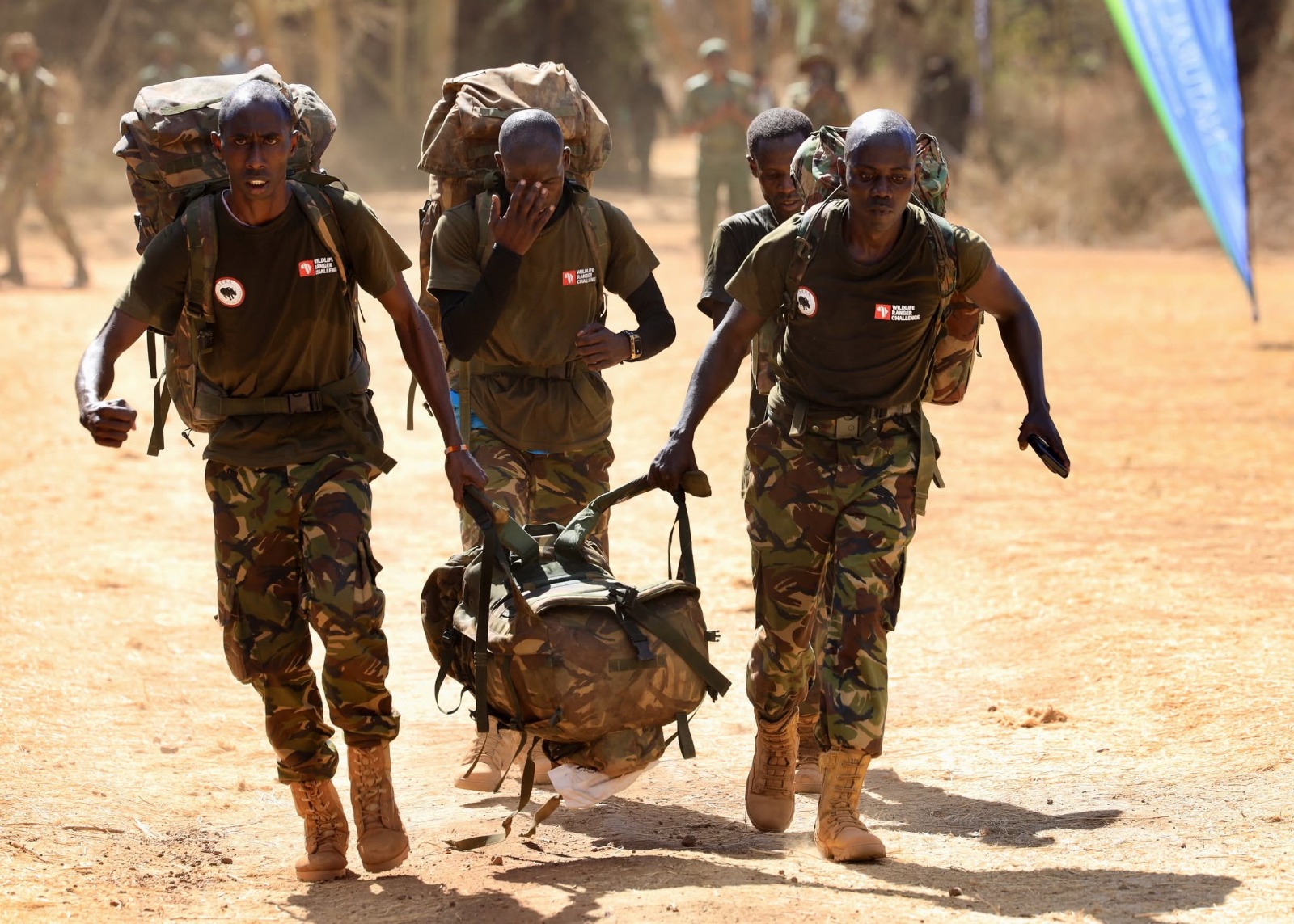
More than 2,000 wildlife and marine rangers have simultaneously completed 21km races across 21 African countries in the continent’s largest challenge dedicated to recognising and supporting the men and women protecting its wildlife and natural habitats.
The rangers, organised into 166 teams, took part in the seventh edition of the Wildlife Ranger Challenge on September 19, with participants carrying equipment weighing up to 22kg during the demanding half-marathon races.
The annual event is organised by conservation charity Tusk and the Game Rangers Association of Africa (GRAA), with funding from Mark Scheinberg.
The initiative was launched in 2020 during the Covid-19 pandemic to support rangers whose work was affected by the disruption caused by the health crisis.
Since its launch, it has raised more than $25 million for ranger welfare, equipment and training and supported or engaged more than 11,500 rangers.
This year’s event is expected to raise an additional $3 million, pushing the total amount raised since the initiative began to about $28 million.
The synchronised races were held across some of Africa’s key conservation landscapes, with regional hub events taking place in Kenya, Uganda, South Africa and Zambia, alongside affiliated races in other countries.
In Kenya, the Lewa Hub winners included the Mountain Bongo Project in the men’s category, IFAW Olgulului in the women’s category and Kenya Wildlife Service Team A in the mixed category.
At the Murchison Falls Hub in Uganda, Kidepo National Park teams won both the men’s and women’s categories.
In South Africa, Marula North won the men’s category, Black Mambas took the women’s title while the Southern African Wildlife College team won the mixed category.
Results from the Zambia regional hub were not immediately available, while organisers said the overall winner would be announced after all race data had been analysed.
The participating rangers underwent two months of preparation before the race, including tactical quizzes and other physical challenges.
Tusk Chief Conservation Officer Chantal Migongo-Bake said the event highlighted the demands faced by rangers in their daily work.
“Today’s display of strength, discipline, and unity across Africa is a powerful reminder of what rangers endure every single day to protect our shared planet,” she said.
Migongo-Bake said Africa had only a fraction of the ranger workforce required to effectively protect its natural areas.
According to organisers, Africa currently has about 65,000 rangers, compared with an estimated 345,000 personnel needed to effectively secure wild spaces and meet global nature conservation targets.
This means the continent has only about one-fifth of the ranger workforce it requires.
Rangers perform a range of duties beyond wildlife protection, including ecosystem monitoring, community peacekeeping and search-and-rescue operations.
Organisers said many rangers, however, continue to work without adequate equipment, health and safety training and insurance.
The Wildlife Ranger Challenge is intended to help address some of those gaps while raising public awareness of the role of rangers in conservation.
Africa is home to nearly a quarter of the world’s terrestrial mammal species and about one-sixth of its plant life, making its ecosystems important to global biodiversity and climate objectives.
Rangers are also expected to play a key role in helping African countries meet the global target of protecting 30 per cent of land and sea by 2030.
GRAA chief executive Louise de Bruin said the challenge provides an opportunity to support rangers while highlighting the importance of their work.
“Rangers don’t ask for recognition, they simply get on with their work as essential planetary health workers, protecting nature and ecosystems, often in incredibly challenging circumstances,” de Bruin said.
Funds raised through this year’s challenge, including match-funding from founding donor Mark Scheinberg, will be channelled to participating ranger units to support operational costs, equipment, medical insurance and specialised training.
The initiative has also contributed to the Ranger Welfare Standards Initiative, launched in 2024 by Tusk and GRAA with support from The Royal Foundation of the Prince and Princess of Wales.
The initiative has so far enabled insurance cover for 6,800 rangers, with a target of reaching 10,000 by 2030.
Organisers said improving welfare and working conditions would be critical to making ranger work a sustainable and respected career and attracting more young people into conservation.
The Wildlife Ranger Challenge has therefore evolved from a fundraising event into a broader campaign for improved welfare, safety, training and investment in Africa’s ranger workforce.