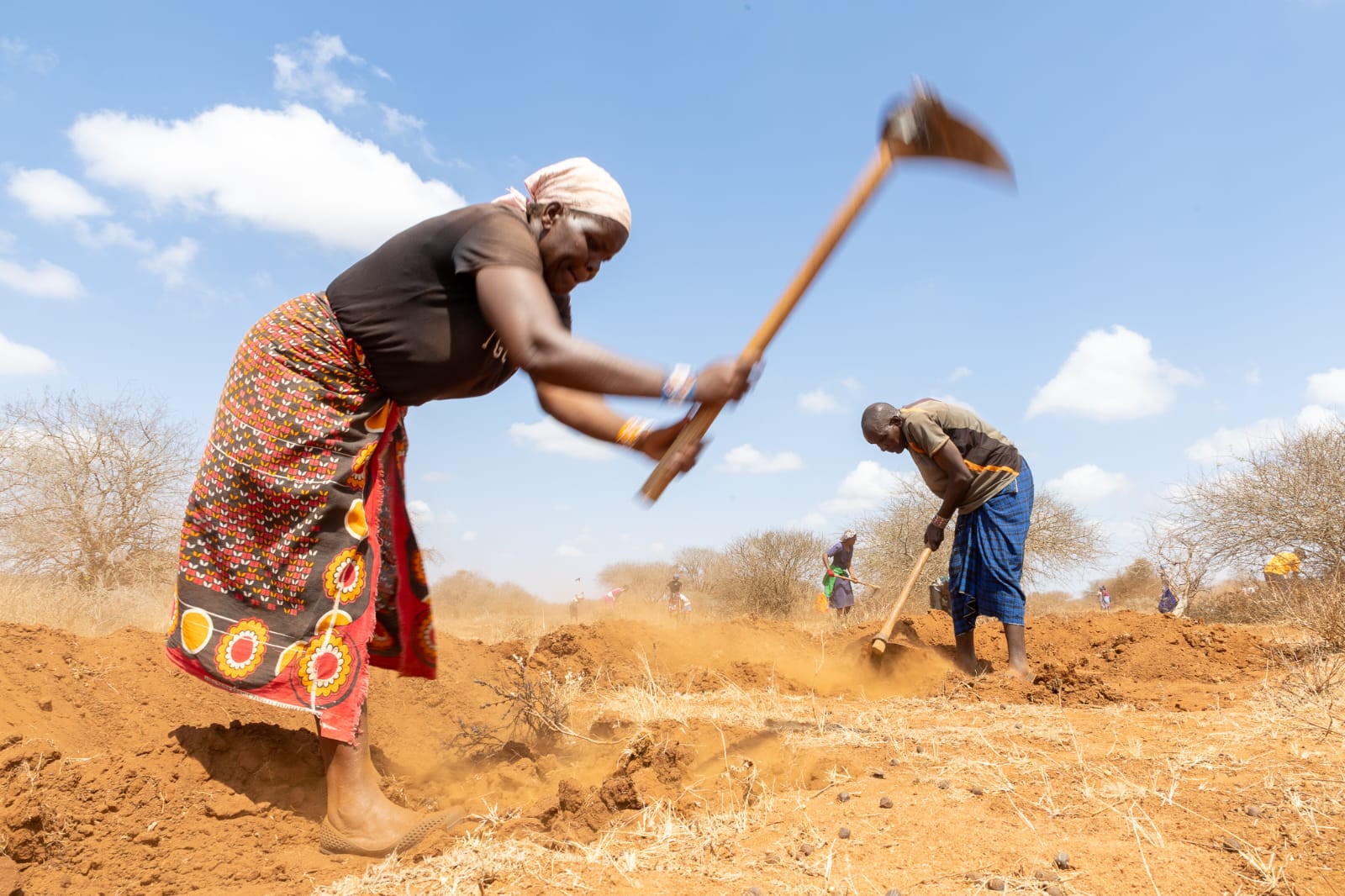
More than 600 Maasai workers are racing to dig 50,000 miniature earth dams across degraded land in the Amboseli ecosystem ahead of expected El Niño rains, in an effort to turn potentially destructive downpours into pasture for livestock and wildlife.
The community-led initiative, being implemented on Mbirikani Ranch in Kajiado County, aims to trap rainwater, reduce soil erosion and revive grasslands in an area increasingly affected by drought, land degradation and pasture scarcity.
The workers are digging semi-circular earth structures known as bunds, which collect rainwater and allow it to seep gradually into the soil instead of running off bare, hardened ground.
Indigenous grass seeds are being planted around the structures to encourage vegetation to regenerate and spread across the surrounding grazing areas.
Big Life Foundation, which is implementing the programme with support from Justdiggit Foundation and the TWENDE project, said teams were working at four sites and digging more than 1,000 bunds daily.
Big Life Foundation’s Rangelands Restoration Manager Ernest Lenkoina said degraded land was worsening pasture shortages among pastoralist communities, making it necessary to prepare the ground to retain as much rainwater as possible.
“One of the biggest crises facing pastoralist communities today is pasture scarcity caused by degraded land,” Lenkoina said.
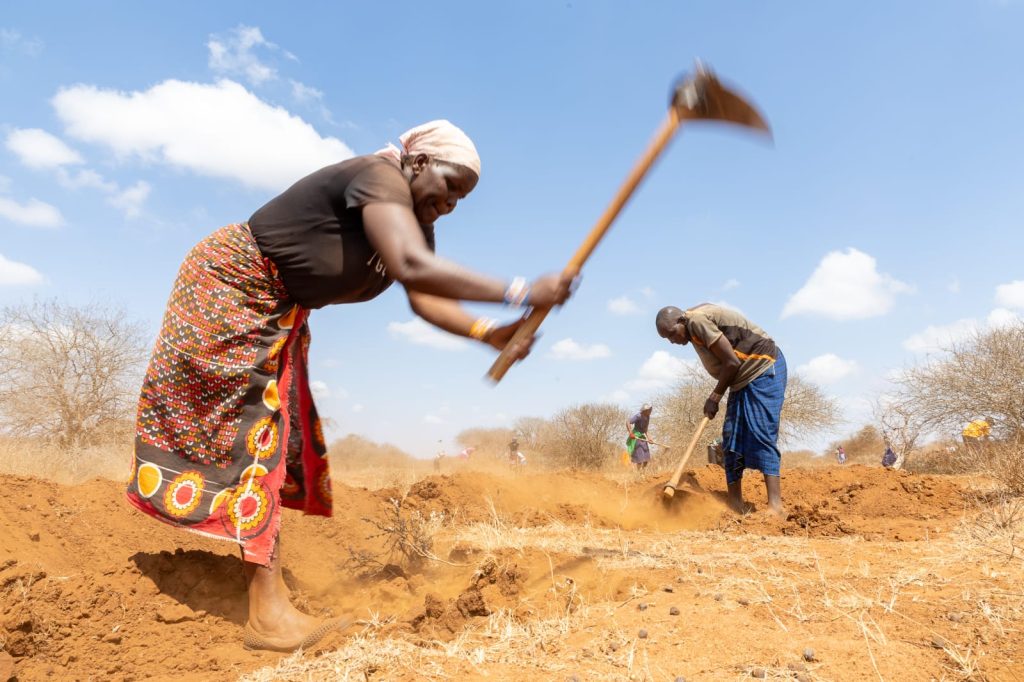
He explained that heavy rainfall on bare and compacted surfaces often runs off quickly, carrying away soil instead of replenishing underground moisture.
A total of 657 casual workers have been engaged, with more than Sh9 million being paid in wages.
Many of those employed are local Maasai women, including widows and households that lost livestock during recent droughts.
The project is also drawing on eight community grass seed banks operated by women’s groups across group ranches in Kajiado. The seed banks supply indigenous grass seeds for restoration while creating income opportunities through seed sales, hay baling and beekeeping.
The bunds, measuring approximately 2.5 metres by five metres, are shaped like wide half-moons and positioned where water naturally flows. They slow runoff, reduce the formation of gullies and allow water to collect and soak into the ground.
The latest campaign builds on a five-year restoration programme by Big Life and its partners, including Conservation International and Justdiggit, with support from Apple Inc and the TWENDE project, among others.
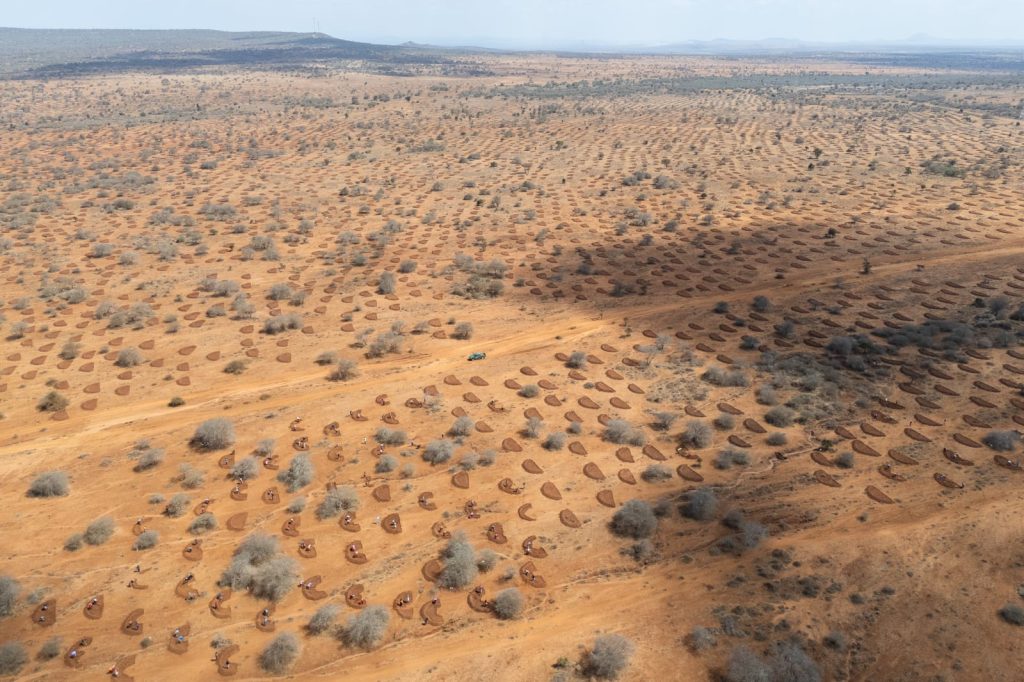
The earlier programme has constructed more than 278,000 bunds across 2,300 acres. Through bunding, natural regeneration and controlled grazing, the area restored with support from Big Life now covers more than 17,500 acres.
Justdiggit Foundation Southern Landscape Manager Caroline Kerichu said communities needed to move beyond discussions about restoration and accelerate practical efforts to revive degraded landscapes.
She said combining indigenous knowledge, scientific approaches and community participation could help nature regenerate while improving livelihoods.
The restoration work is already showing results in areas including Ilchalai, Loosikitok and Olngosua, where regenerated grasslands have reportedly remained greener for longer and provided pasture during dry periods when untreated areas experienced severe shortages.
To protect the newly planted grasses, communities have introduced temporary grazing restrictions to allow vegetation to mature and produce seeds.
Community Land Management Committees and rangeland scouts are monitoring the restoration sites and enforcing agreements to keep livestock away until the grass is sufficiently established.
The initiative comes as the Greater Amboseli ecosystem faces growing pressure from recurring droughts, changing land use and degradation. The area supports Maasai pastoralist communities alongside elephants and other wildlife, making healthy grazing land essential for both livestock production and conservation.
Big Life Foundation said restoring communal pastures would not only provide forage during dry spells but also help reduce pressure on neighbouring farms by keeping livestock and wildlife within healthier grazing areas.
The organisation operates across 1.6 million acres in the Amboseli-Tsavo-Kilimanjaro ecosystem spanning southern Kenya and northern Tanzania, working with communities and government agencies to conserve wildlife, protect natural habitats and sustain local livelihoods.