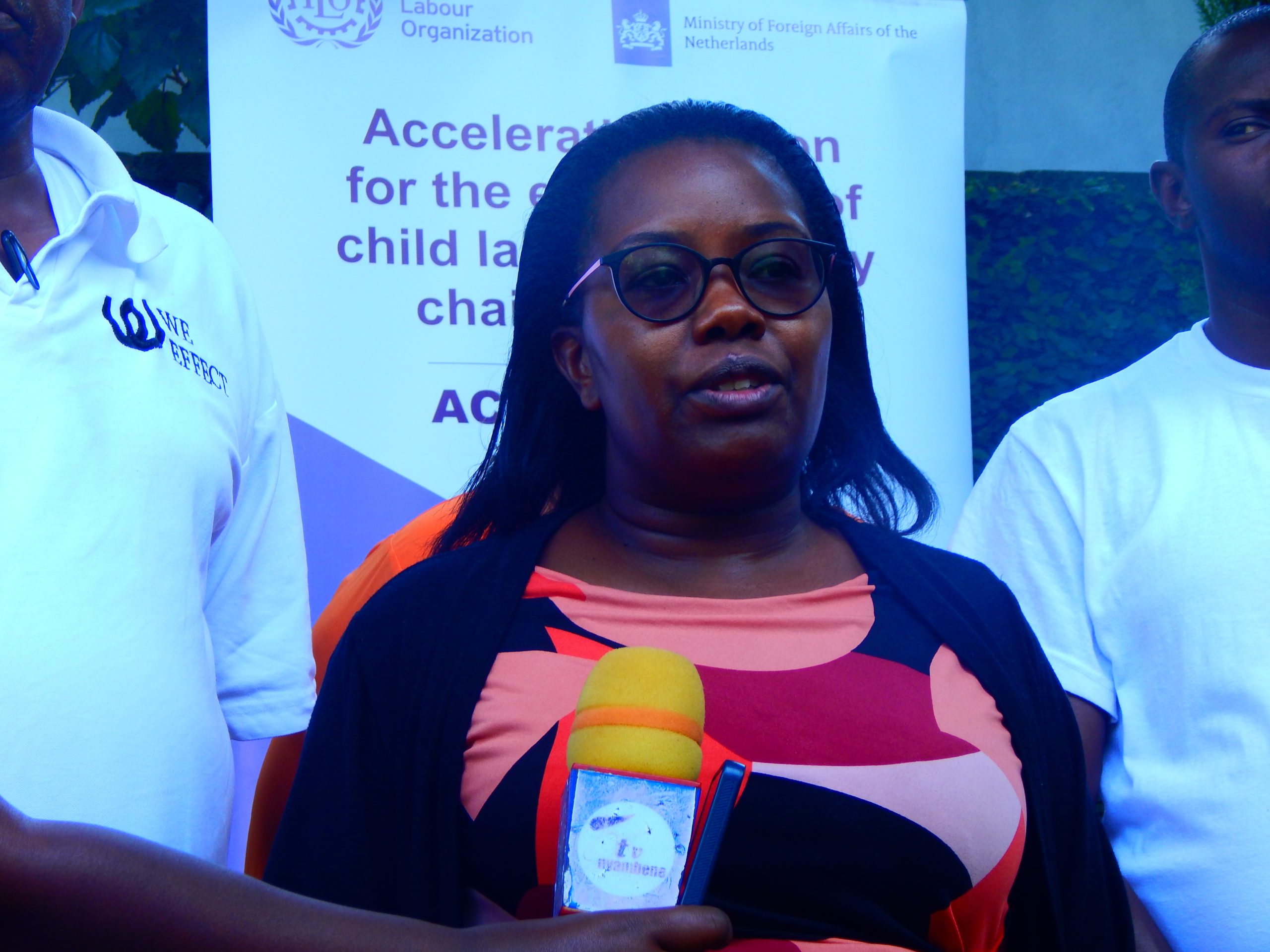
The International Labour Organization (ILO) has concluded a five-day training program in Meru County aimed at strengthening coffee cooperative societies and accelerating efforts to eliminate child labour within agricultural supply chains.
The training brought together cooperative board members, managers and officers from the county government, focusing on governance, leadership, financial management and sustainable livelihood systems designed to improve rural economies and reduce vulnerability among farming households.
Speaking during a press briefing at Alba Hotel in Meru, ILO Project Coordinator for the “Accelerating Action for the Elimination of Child Labour in Supply Chains in Africa” initiative, Helen Rintari, said the program is designed to strengthen cooperative leadership through structured training and certification.
“ We have been training and certifying our Coffee Board directors in a certification course by the ILO known as Think, Start my Coop,” said Ms. Rintari.
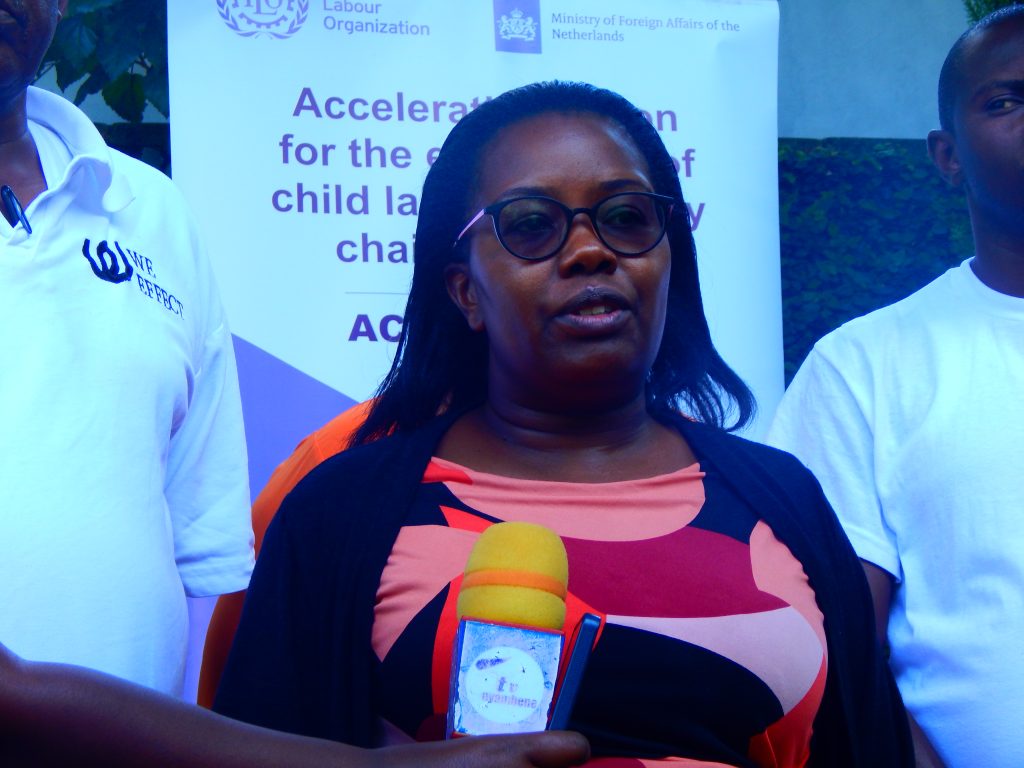
ILO Project Coordinator,Hellen Rintari addressed the Press. Photo by Brian Gitonga
She noted that cooperatives play a central role in rural development because they bring farmers together and help them build stable livelihoods that can reduce pressure on families and prevent children from engaging in labour.
“ Cooperatives have a mandate to bring together farmers, educate them and support them towards creating sustainable livelihoods,” said Ms Rintari.
She further clarified that child labour remains a widespread challenge not only in Kenya but across Sub-Saharan Africa and the wider continent. She observed that lack of awareness remains one of the biggest barriers in addressing the problem, noting that many communities still do not clearly understand what constitutes child labour.
“ First of all we need to gain information in child labor: what really is child labor. Child labour is anything that removes a child from being a child,” said Ms. Rintari.

ILO Project Coordinator,Hellen Rintari addressed the Press. Photo by Brian Gitonga
She added that child labour continues to threaten education outcomes and long-term development across Africa, warning that urgent awareness creation is needed at the community level.
Mariara Farmers Cooperative secretary manager Doreen Makena said the training has empowered women leaders by strengthening their participation in cooperative governance and decision-making processes. She noted that cultural barriers still limit women’s involvement despite their contribution to society.
“ We have discovered that in our societies, most of the women shy off, they do not even take up the task because at times we are told that we should do inferior duties and by the time we come back we realize that a policy has been passed,” said Doreen Makena.
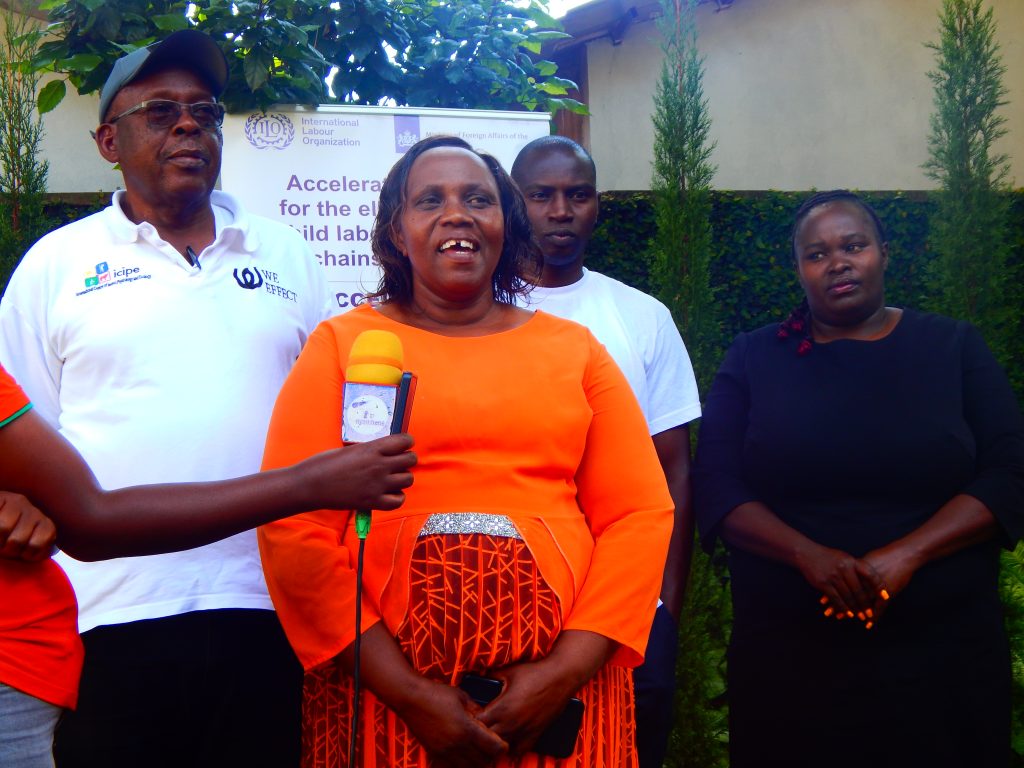
Mariara Farmers Cooperative secretary manager Doreen Makena adresses the press. Photo by Brian Gitonga
Meru Central Cooperative Union Chairperson Zablon Mbaabu said the training has strengthened leadership, governance and financial management skills among cooperative leaders. He noted that this will help farmers improve earnings through proper systems that discourage child labour.
“ We have been taught how farmers in our societies can earn money by following the right procedure without having to use children as laborers,” said Mbaabu.

Meru Central Cooperative Union Chairperson Zablon Mbaabu adresses the press. Photo by Brian Gitonga
He added that the program has also improved understanding of cooperative governance structures and market engagement strategies, saying this would strengthen efficiency and transparency in the sector.
Meru County Chief Officer for Trade, Tourism and Cooperatives Mugambi Sande said the training is key in strengthening governance systems within cooperatives, noting that proper leadership remains central to their success.

Meru County Chief Officer for Trade, Tourism and Cooperatives Mugambi Sande adresses the press. Phot by Brian Gitonga
He noted that the program also focused on financial management, leadership accountability and capacity building for both existing and emerging cooperatives.
“ We talk about governance because for a cooperative to run very well, it must be properly governed,” said Sande.
Edited by John Majau