Chuka University is becoming a global giant through research and innovations after securing major international research funding, including a Sh191 million European Union grant.
The grant is to strengthen disease outbreak preparedness and surveillance across Sub-Saharan Africa, as it expands its research portfolio to address public health, global disease challenges such as Ebola, food security and agricultural challenges.
The university is implementing 11 major research projects that have attracted more than €1 million in funding, according to Vice-Chancellor Professor Henry Mutembei.
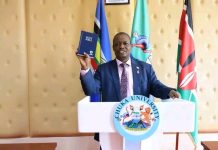
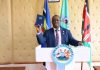
”The University is increasingly positioning itself as a centre for research, innovation and solutions to societal problems. The institution has deliberately built research teams capable of attracting competitive international grants,” said the VC.

He credited lecturers and researchers for securing funding, saying the university had adopted a team-based approach to research rather than relying on individual efforts.
“In my tenure we talk of teams. I shall never refer to I, teams execute, we facilitate and guide,” he said.
Among the flagship initiatives is the One Collaborative Training Programme for Outbreak Preparedness and Universal Surveillance (OCTOPUS), an EU-funded project bringing together 12 institutions from Africa and Europe to strengthen disease surveillance, epidemiology, biostatistics and public health preparedness.
The project, co-led by Chuka University will build the capacity of public health professionals through postgraduate training, practical placements, short courses, workshops and research collaborations.
The initiative seeks to improve the ability of participating countries to detect emerging disease threats, analyse health data and respond effectively to outbreaks.
Chuka University’s research team is led by Dr Elizabeth Njoroge as Principal Investigator, alongside Prof Mutembei, Prof Dennis Muriithi, Prof Mark Okongo, Dr Alice Lunani, Dr James Mwangi, Dr Muendo Cornelius and Dr John Kirimi.
The project brings together partners from Kenya, Uganda, Tanzania, Rwanda, Burundi and the Democratic Republic of Congo, among other international collaborators.
Another major research undertaking is the five-year Resilient Climate-Smart Aflatoxin Intervention and Monitoring in Kenya (RECLAIM-KE) project, supported by the Danish International Development Agency (DANIDA).
The stakeholders are to tackle aflatoxin contamination in Kenya’s food and animal-feed systems.
The project is using artificial intelligence modelling, genomic analysis and microbial biocontrol methods to strengthen surveillance and prevent contamination along the food value chain, from farms to markets and households.
Aflatoxins are toxic substances produced by certain fungi that contaminate crops such as maize and groundnuts.
Long-term exposure to some types has been linked to liver cancer, impaired child growth and weakened immunity.
The university is also working with the International Atomic Energy Agency (IAEA) on a research project to strengthen Kenya’s food security through nuclear safety-compliant technologies.
The initiative is expected to establish a Food Security Centre of Excellence at Chuka University, with specialised facilities for water and soil management, crop and livestock genomics, animal breeding, reproductive technologies, livestock nutrition and food safety.
The project is led by Prof Mutembei as Principal Investigator, working with Prof Eunice Githae, Prof Moses Muraya, Prof Paul Kamweru and Prof Joel Gichumbi.
Beyond team work research, Chuka University students are developing innovations with direct social and environmental benefits.
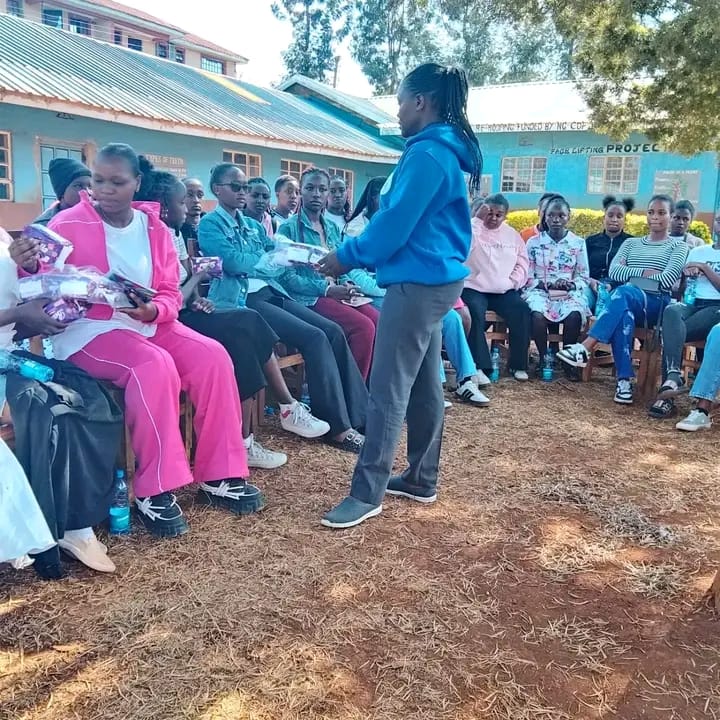
One of the notable breakthroughs is BanaGirl sanitary towels developed by student innovator Pamela Apuko using banana fibre.
The innovation earned her recognition in the Presidential Innovation Challenge and Award, including a cash prize, and is progressing towards commercialisation with support from the Kenya National Innovation Agency.
The biodegradable sanitary product seeks to address menstrual hygiene challenges while reducing dependence on conventional sanitary materials and making use of locally available agricultural resources.
The university has also expanded research into climate-smart agriculture, livestock production, renewable energy and sustainable food systems through international collaborations.
These include an IAEA-supported mixed crop-livestock research programme, a European-funded project on climate-resilient dairy goat production and initiatives promoting agricultural value addition and technology transfer.
Mutembei said the university was also strengthening academic programmes in preparation for the admission of the first Competency-Based Education (CBE) cohort expected in 2029.
He added that the institution was investing in good governance, accountability, infrastructure development and partnerships with industry to connect academic training with practical needs.
The Vice-Chancellor recognised and awarded lecturers whose research teams had attracted competitive grants, as well as students whose innovations had received national and international recognition.
The highest research grant recognition went to the OCTOPUS research team led by Dr Njoroge, while the highest development grant recognition went to a team led by Dr Mary Gichure, with Prof Mutembei and Dr Munene Nderi among the researchers recognised for their work.
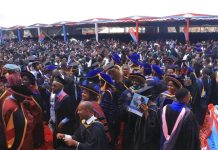
Cabinet Secretary to the Cabinet Mercy Wanjau during the Institution’s 15th graduation ceremony heavily praised the university VC and management for expanding its research and innovation footprint beyond Kenya.
She cited the achievements of John Tingoi Lapit, who emerged runner-up in the 2025 WorldQuant Championship, Mary Akoth Odhiambo, who received the 2026 Quant Resilient Award, and Apuko, who received the 2026 Presidential Innovation Award.
“The achievements demonstrated how universities could transform local knowledge and talent into solutions with national and international relevance,” she said.
University Council Chairman Professor David Serem also congratulated Mutembei for the institution’s growth and his recognition as the 2026 Vice-Chancellor of the Year.
Prof. Mutembei was recently named the VC of the year at the 4th Uongozi Career Awards, held during the 3rd East African Employability Summit (EAES26) in Nairobi.
The recognition celebrates Prof. Mutembei’s leadership and contribution to the growth and success of Chuka University.
His leadership was described as people-centred, highlighting his commitment to excellence, the welfare of the university community and transformative education.